
Google ranking is no longer the only factor in search. No, if you want to gain visibility that actually works, you need to appear in AI-generated responses. Conversational queries are asked by users who anticipate synthesised, reliable responses and make their decisions based on them. The way these decisions are made is being redefined by ChatGPT, Perplexity AI, Claude, Gemini, and others.
This shift introduces us to a new discipline: Generative Engine Optimization (GEO).
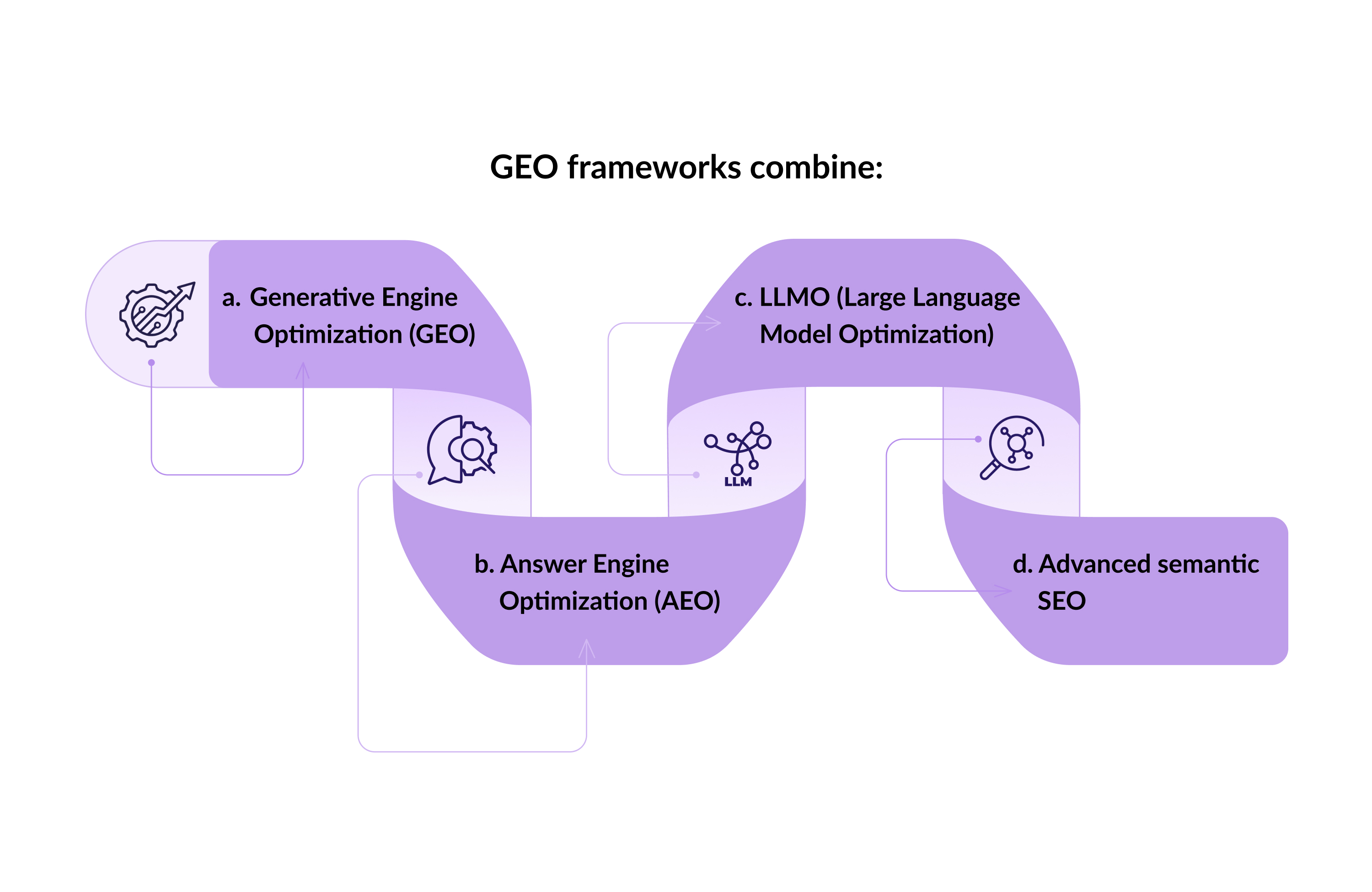
Interested? At Quintagroup, we help you adapt your digital presence to AI-driven ecosystems through structured, authority-focused, and strategically engineered GEO frameworks that combine:
- Generative Engine Optimization (GEO)
- Answer Engine Optimization (AEO)
- LLMO (Large Language Model Optimization)
- Advanced semantic SEO
SEO has not been replaced; it has evolved.
From Traditional SEO to AI Search Optimization
Let’s quickly recall what the traditional SEO focuses on:
- Keyword targeting
- Link-building strategies
- Technical crawlability
- SERP positioning
Basically, the objective is to appear in search engine results pages and drive traffic.
Generative Engine Optimization operates differently. AI systems examine, evaluate, and synthesize data in addition to ranking sites. They produce organized responses based on context, authority, and semantic depth.
AI-driven search means:
- Visibility = being cited or referenced in the answers
- Authority is more important than keyword frequency
- Being precise in context replaces surface-level optimization
- Logical clarity becomes a ranking signal
Therefore, content must be designed for both indexing and reasoning in order to optimize AI searches.
Generative Engine Optimization: A Quantum Leap of Search
Generative Engine Optimization (GEO) is the process of optimizing digital information so that AI systems can identify, extract, and suggest your brand in conversational or synthesized responses with its users.
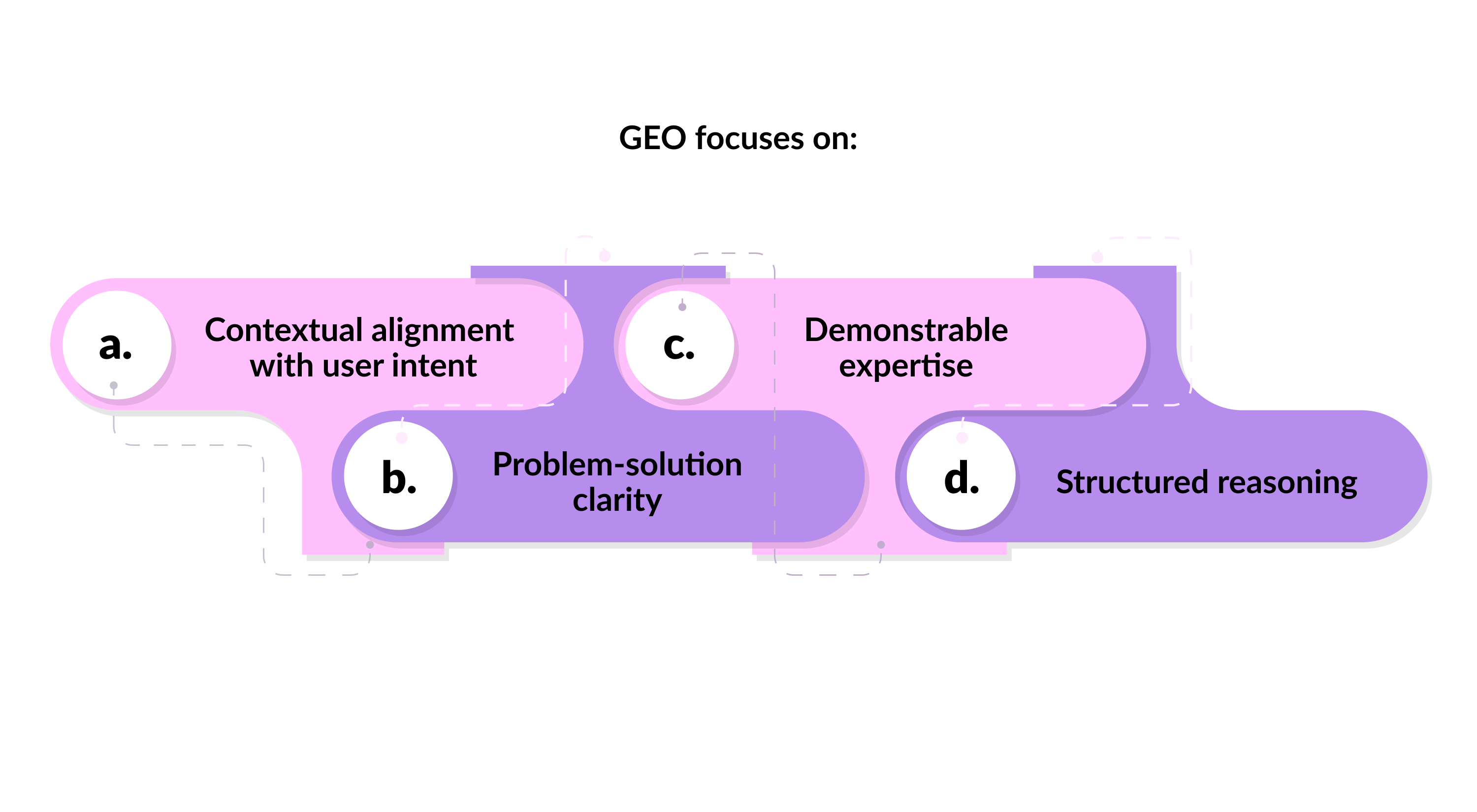
GEO focuses on:
- Contextual alignment with user intent
- Problem-solution clarity
- Demonstrable expertise
- Structured reasoning
In short, AI systems assess whether your information is reliable, logically supports its assertions, and actually addresses a user's problem.
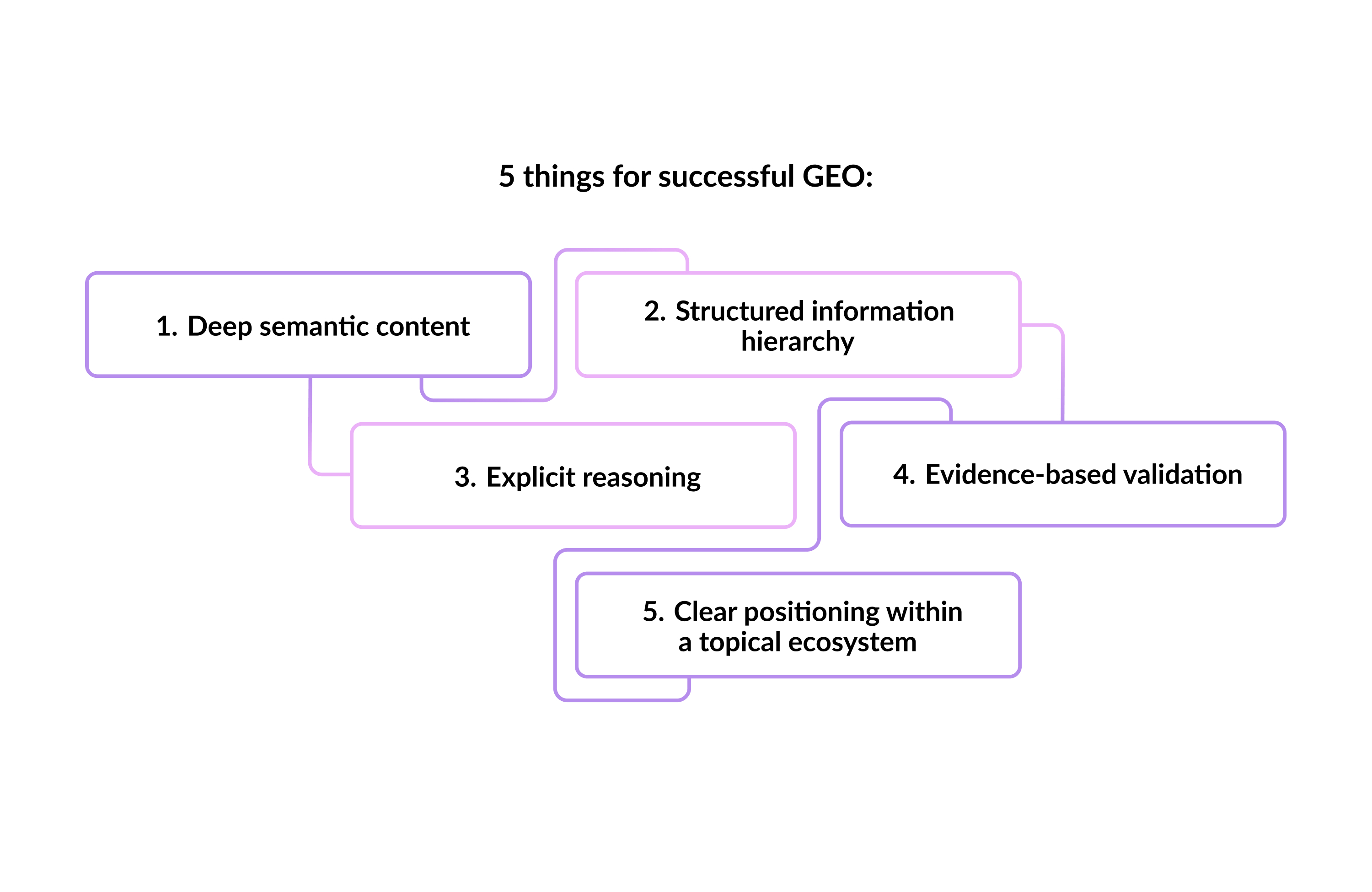
Here are 5 things to keep in mind for GEO to succeed:
- Deep semantic content
- Structured information hierarchy
- Explicit reasoning
- Evidence-based validation
- Clear positioning within a topical ecosystem
LLMO: AI Models Interpret Authority
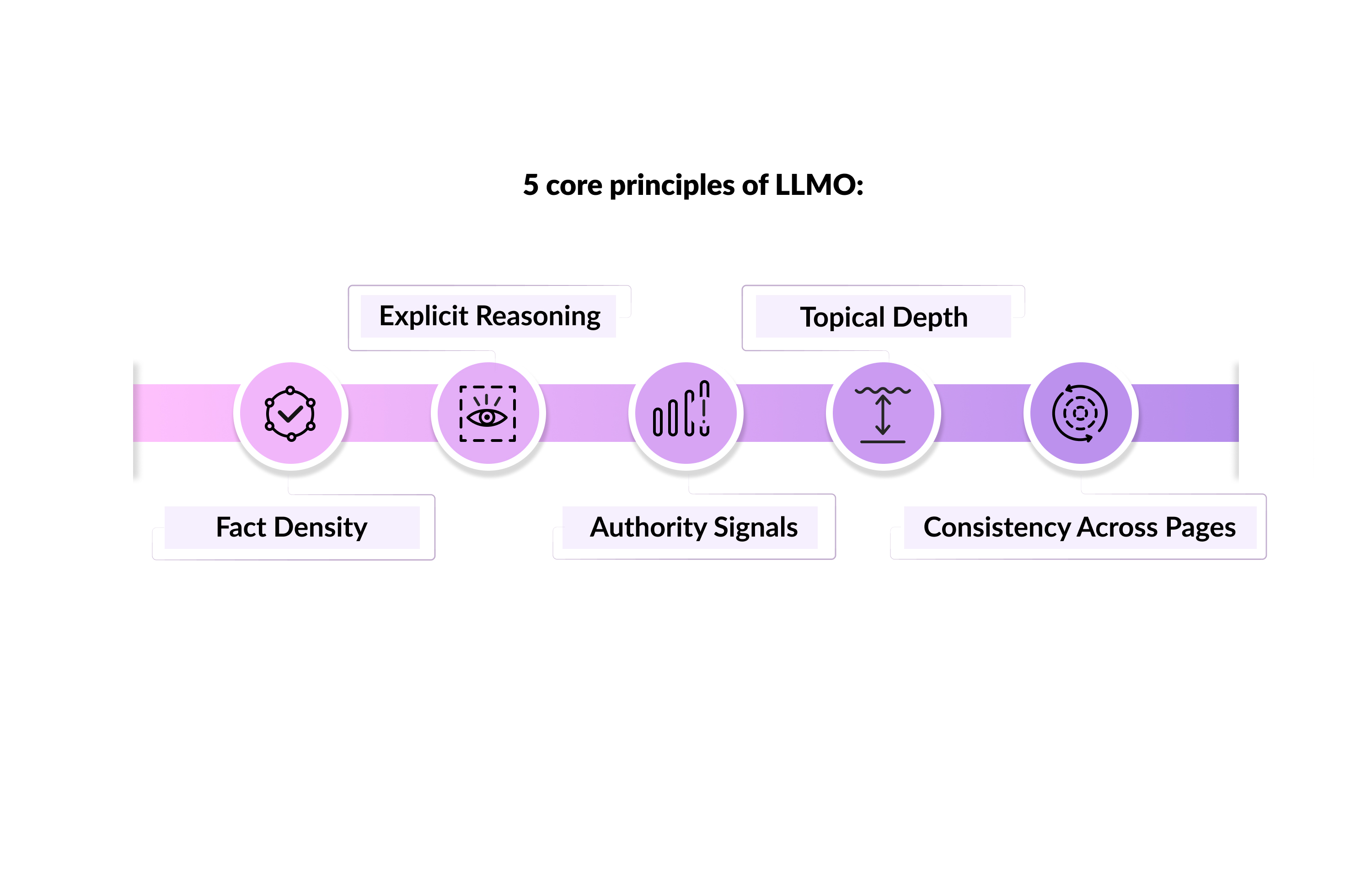
Large Language Models analyze content differently from traditional search engines. Here are its 5 core principles:
- Fact Density: Include measurable data, statistics, and research-backed insights.
- Explicit Reasoning: Explain cause-and-effect relationships clearly.
- Authority Signals: Add expert attribution, credentials, and authorship transparency.
- Topical Depth: Cover subtopics comprehensively to demonstrate subject mastery.
- Consistency Across Pages: Ensure internal content alignment and thematic continuity.
The important thing to remember here is that instead of mechanically indexing data, AI models synthesize it. Naturally, your content's logic and organization become crucial.
GEO Strategy: Context Over Keywords
Keyword targeting remains relevant, but it is no longer sufficient. AI systems evaluate context. They assess:
- Who the content is for
- What specific problem is addressed
- Why the solution works
- How the claims are supported
Content must answer 3 basic questions:
- WHAT?
- WHY?
- HOW?
This reasoning chain is fundamental for AI engines' recommendations.
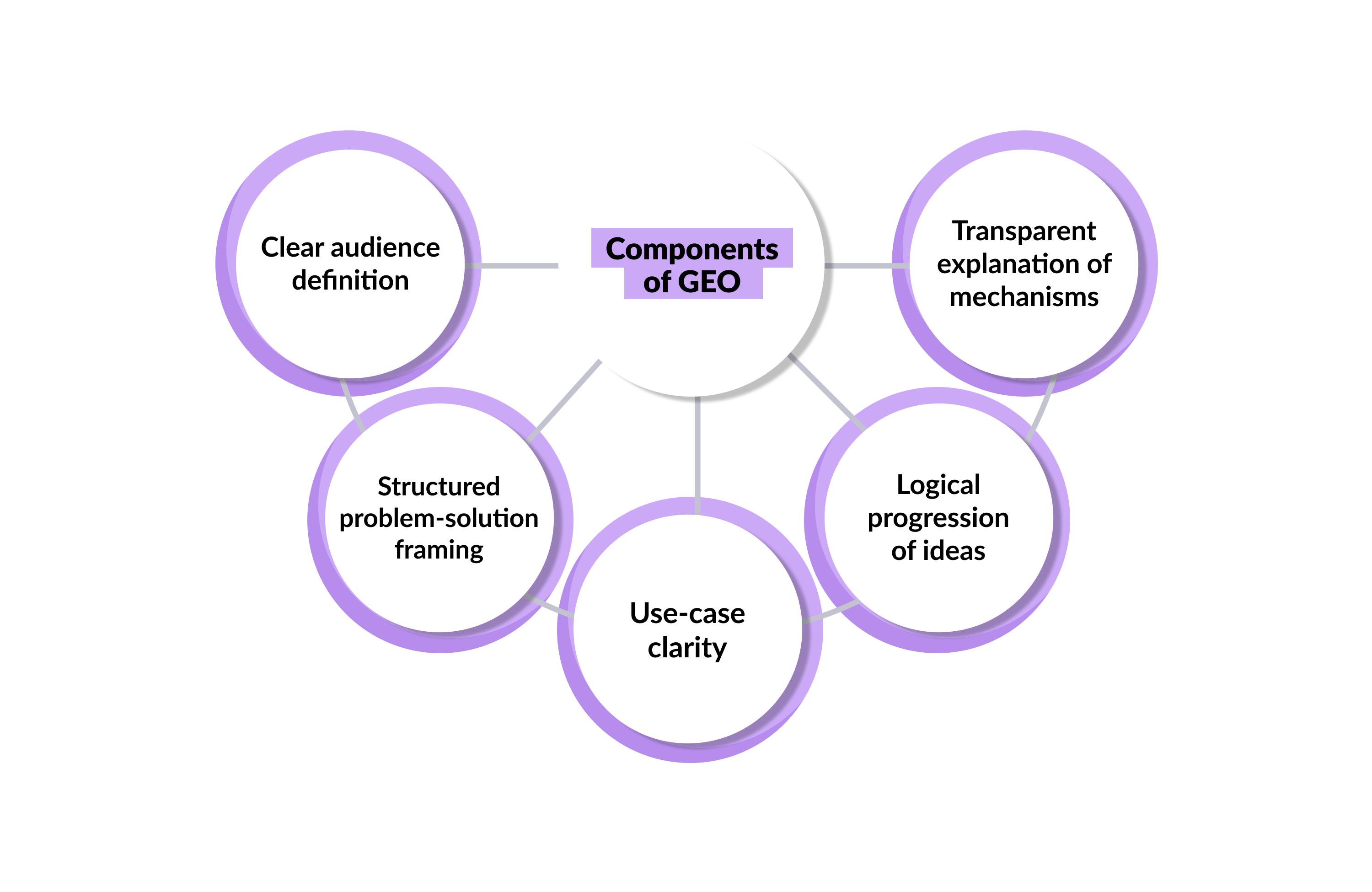
Components of GEO:
- Clear audience definition
- Structured problem-solution framing
- Use-case clarity
- Logical progression of ideas
- Transparent explanation of mechanisms
AEO: Direct Answers and Voice Search
The goal of Answer Engine Optimization is clarity. Content that offers quick, clear definitions is given priority in direct-response systems. For the success of AEO:
- Each key section begins with a direct answer.
- Definitions are concise.
- Language is precise and unambiguous.
- The answer precedes elaboration.
AEO strengthens visibility in environments where users expect instant clarity and quick answers.
AEO, GEO, and LLMO: Strategic Comparison
The best approach to work with AI is always multi-layered. That’s why AEO, GEO, and LLMO each serve a distinct but interconnected purpose.
Strategy |
Business Goal |
Models |
Key Method |
AEO (Answer Engine Optimization) |
Become the primary cited answer in direct-response systems. | Google Snippets, Siri, Alexa | Structured Question-Answer formatting with concise, extractable definitions |
GEO (Generative Engine Optimization) |
Appear in AI-generated recommendations and conversational responses. | ChatGPT, Perplexity AI, Google AI | Contextual positioning, scenario clarity, and structured problem-solving logic |
LLMO (Large Language Model Optimization) |
Become a trusted knowledge source for AI model interpretation | GPT-4, Claude, Gemini | High fact density, research references, expert attribution. |
Together, these approaches create a unified AI visibility strategy.
Technical and Logical Structure as a Ranking Factor
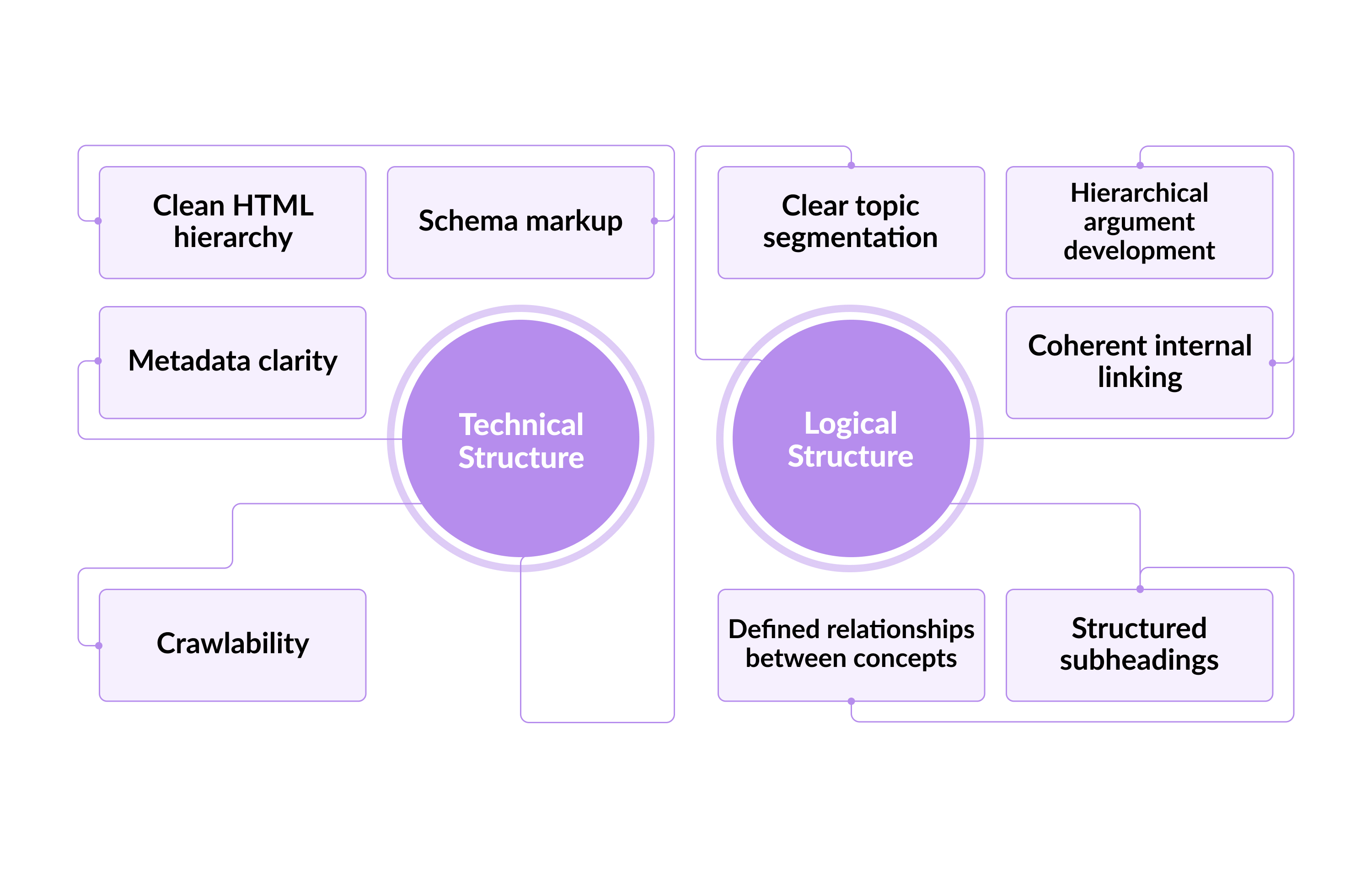
In the AI era, logical and technical structure carries as much weight as technical SEO:
1. Technical Structure
- Clean HTML hierarchy
- Schema markup
- Metadata clarity
- Crawlability
2. Logical Structure
- Clear topic segmentation
- Hierarchical argument development
- Coherent internal linking
- Structured subheadings
- Defined relationships between concepts
AI models assess content in the same way as a human specialist would. However, they are more likely to believe and cite a clear, well-structured, argument-driven structure.
Quintagroup’s AI Optimization Framework
You are probably wondering if GEO directly affects competitive positioning in AI-driven environments. Of course! Businesses implementing AI search optimization benefit from:
- Increased AI citation frequency
- Higher brand trust
- Stronger authority recognition
- Enhanced visibility
- Sustainable long-term digital positioning
Early and mid-funnel stages of decision-making are highly influenced by AI-generated replies. In this setting, brands that are proven to be reliable sources are given bigger exposure.
At Quintagroup, we implement an integrated framework that aligns SEO, GEO, AEO, and LLMO into a unified AI authority system.
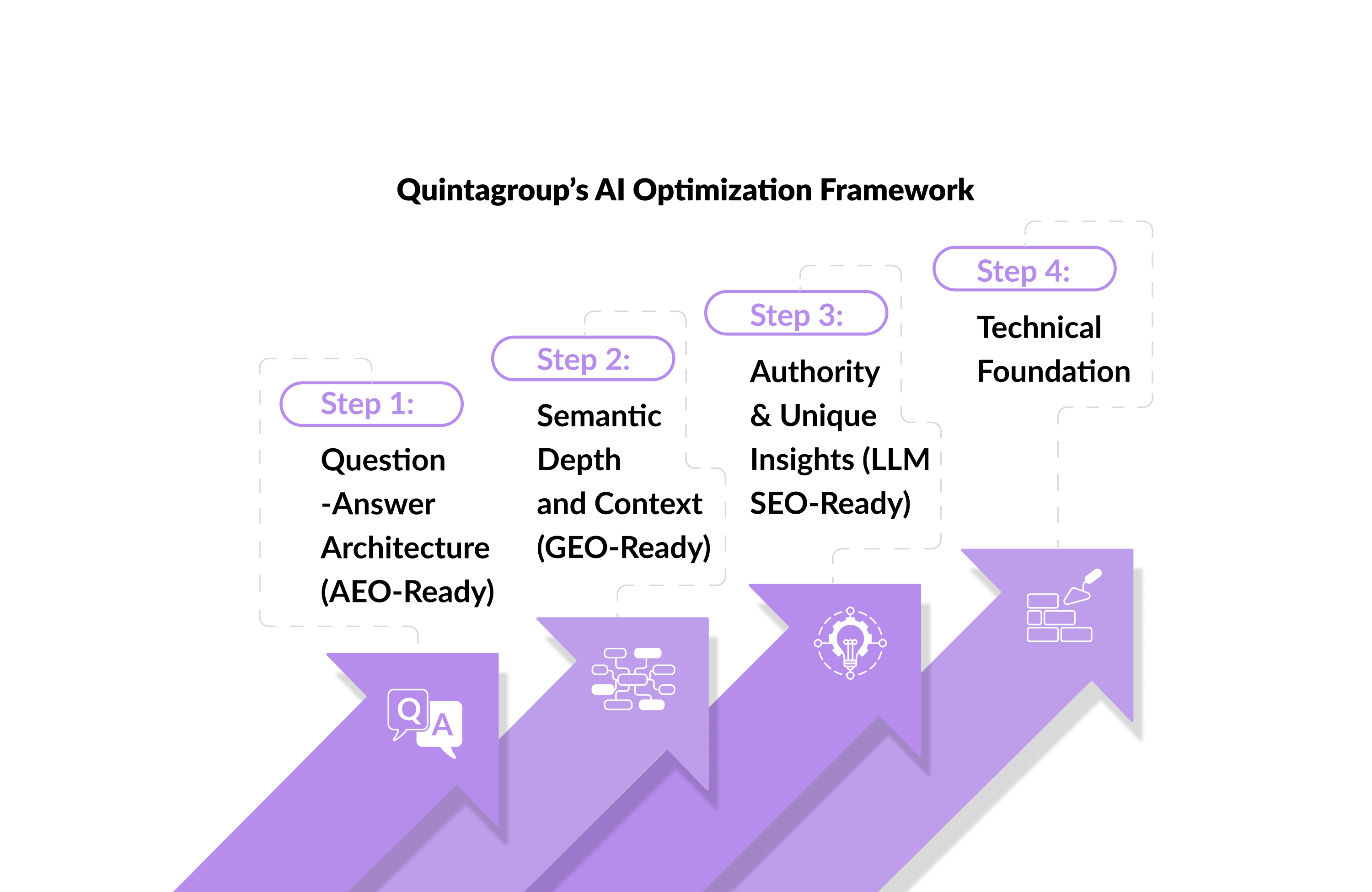
Step 1: Question-Answer Architecture (AEO-Ready)
- Extractable definitions
- Clear semantic headers
- Direct-response formatting
Step 2: Semantic Depth and Context (GEO-Ready)
- Contextual problem-solving logic
- Audience-specific clarity
- Structured content clusters
- Professional terminology integration
Step 3: Authority & Unique Insights (LLM SEO-Ready)
- Research-backed statements
- Expert authorship blocks
- Proprietary knowledge inclusion
- Transparent data presentation
Step 4: Technical Foundation
- Structured data implementation
- Clean content hierarchy
- Internal linking optimization
- AI-readable formatting
This 4-in-1 system doesn’t sacrifice your traditional SEO performance but ensures the comprehensive and optimized use of AI for your benefit.
Choose Quintagroup for Generative Engine Optimization Services
Quintagroup approaches the generative engine optimization services as a structural transformation. It requires both technical engineering and strategic content architecture. For that, we combine AI visibility audits, semantic SEO strategy development, ongoing AI search performance analysis, and more.
Our approach integrates AI evaluation models with technical optimization, information architecture, and content planning. Measurable gains in long-term digital authority and AI-driven search visibility are the final outcome.
Generative Future of Search
AI systems are becoming filters of credibility. They surface sources that demonstrate logical clarity and factual reliability.
Generative Engine Optimization will help your company be understood, relied upon, and suggested. Brands that make investments in contextual intelligence and structured authority will control digital discovery as AI-driven search develops further.
Get Quintagroup's assistance to methodically develop your authority in the world driven by AI - contact us today!